Vulnerability of Tribal Communities: Strengthening Dignity, Rights, and Resilience
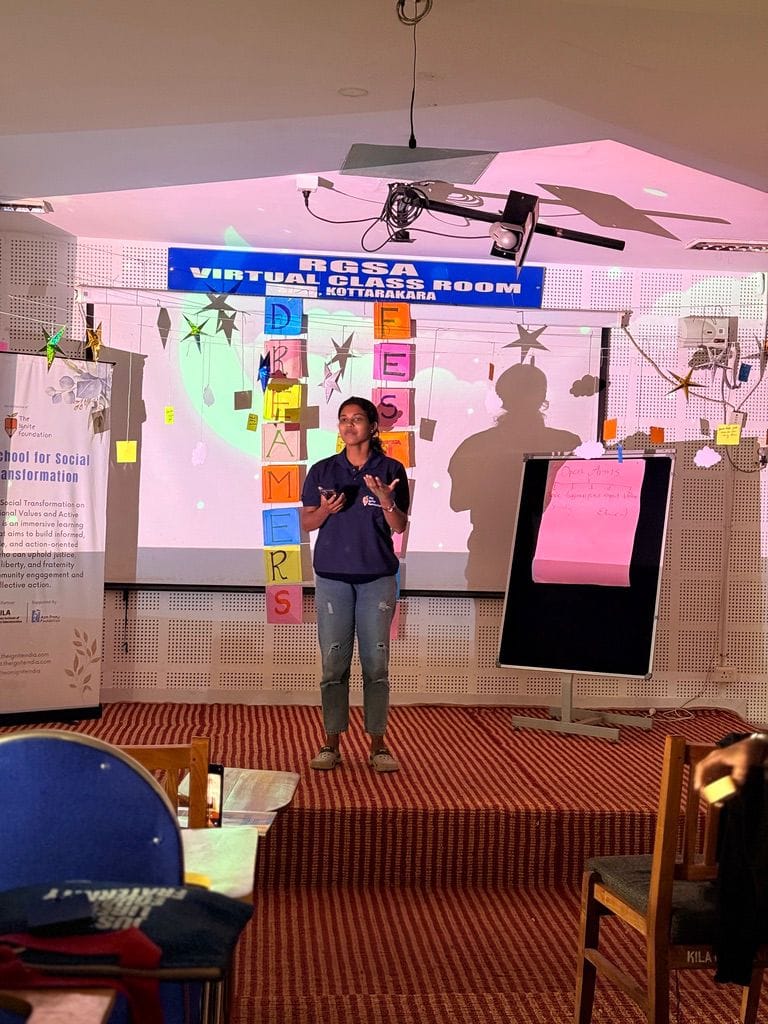
At the Solutions Festival, participants of School for Social Transformation (SST) 8.0 continued to present deeply grounded community action projects shaped by lived realities and social responsibility. The next presentation was by Vijitha C. K., who introduced her project titled “Vulnerability of Tribal Communities to External Social and Economic Influences,” focusing on the Paniya community in Kozhikode, Wayanad, and Malappuram.
About the Project
Vijitha’s project centres on the Paniya community, one of the most marginalised Scheduled Tribe groups in Kerala. Historically subjected to bonded and attached labour under landlords, the community continues to experience the long-term effects of exploitation even after the abolition of bonded labour, leading to persistent poverty, landlessness, low literacy levels, and poor health conditions.
Many families also face limited access to education and employment, social exclusion, language barriers, and lack of awareness about legal rights, which together deepen their vulnerability. These conditions have made the community highly susceptible to external social and economic influences that affect their cultural identity, belief systems, and everyday choices, highlighting how this vulnerability is rooted not in circumstance alone, but in historical injustice and systemic neglect.
The Proposed Solution
Vijitha’s project proposes a holistic, community-centred approach focused on empowerment rather than charity. The initiative aims to increase awareness and knowledge of laws, improve livelihood opportunities and economic security, make quality education more accessible, protect culture and traditions, reduce dependency and exploitation, strengthen access to information and services, and promote community participation and leadership.
To achieve these goals, the activity plan includes cultural programmes to strengthen identity and pride, educational support activities for children and youth, livelihood development initiatives, and awareness programmes on rights, welfare schemes, and legal protection. These interventions are designed to work with the community rather than over it, building confidence, capacity, and collective strength from within.
Why It Matters
This presentation powerfully reminded us that vulnerability is created by systems, not by communities themselves. Vijitha’s project reframes tribal empowerment as a process of restoring agency, where people are equipped to understand their rights, preserve their culture, and shape their own futures.
It challenges us to move beyond sympathy and towards solidarity, recognising tribal communities as knowledge holders, not just beneficiaries.
A Step Forward
As part of the Solutions Festival, this presentation stood as a commitment to justice, dignity, and inclusive development. By strengthening education, legal literacy, livelihoods, and cultural identity, the project lays the foundation for empowered tribal communities, where participation replaces dependency, and where sustainable progress grows from within.