Mapping Illegal Quarries in the Western Ghats: Protecting People and Ecosystems
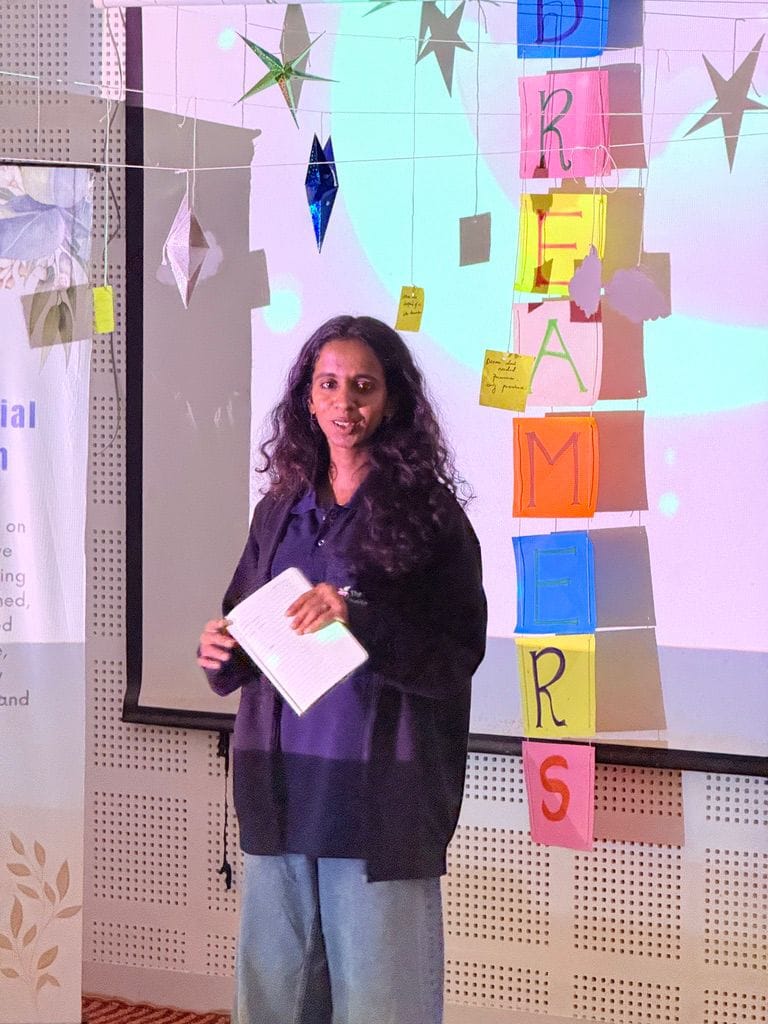
At the Solutions Festival, participants of School for Social Transformation (SST) 8.0 continued to present community-driven ideas shaped through research, lived realities, and constitutional values. The next presentation was by Anjana, who introduced her Community Action Project titled “Mapping Illegal Quarries in the Western Ghats.”
About the Project
Anjana’s project emerges from Kerala’s growing ecological crisis, particularly the devastating landslides that have increased in frequency and intensity over the years. One of the major causes behind these disasters is the unchecked growth of mining and construction in ecologically sensitive areas of the Western Ghats.
Despite clear warnings from expert reports such as the Kasturirangan and Madhav Gadgil Committees, which recommend strict restrictions and, in some cases, a complete ban on mining in Ecologically Sensitive Areas (ESAs), illegal quarries and constructions continue to operate.
Focusing on Kozhikode district, where nearly 27% of the area falls within the Western Ghats highlands, the project highlights how steep slopes, heavy monsoon rainfall, and unstable geological formations make the region extremely vulnerable to landslides. Yet, local communities often remain unaware or disengaged, and local governments show limited accountability in regulating quarry operations.
The Proposed Solution
The project proposes using geo-spatial technology (GIS) to document and analyse land-use and land-cover changes in the Western Ghats over time. By mapping vegetation loss, slope variations, and quarry expansion, the initiative aims to systematically identify and document the number, area, and depth of illegal quarries operating in ecologically sensitive regions.
Anjana outlined a multi-phase action plan that begins with studying existing laws, expert reports, and ecological systems using secondary data. The plan includes mapping all quarries using GIS tools, preparing detailed reports on social and environmental impacts, submitting findings to authorities, filing RTIs, raising issues in Gram Sabhas, and conducting door-to-door awareness campaigns to mobilise community action and demand accountability.
Why It Matters
This presentation highlighted how environmental destruction often continues not because of lack of knowledge, but because of lack of public pressure and accountability. Anjana’s project bridges science, law, and community action, transforming technical data into a democratic tool.
It reinforces that ecological justice is inseparable from people’s right to life, safety, and dignity.
A Step Forward
As part of the Solutions Festival, this presentation stood as a commitment to protecting fragile ecosystems and vulnerable communities. By combining technology, legal pathways, and grassroots mobilisation, the project lays the foundation for informed citizenship and environmental accountability, ensuring that development does not come at the cost of lives and landscapes.