Lack of Autonomy for Young Women in Malabar: Choosing Freedom Over Pressure
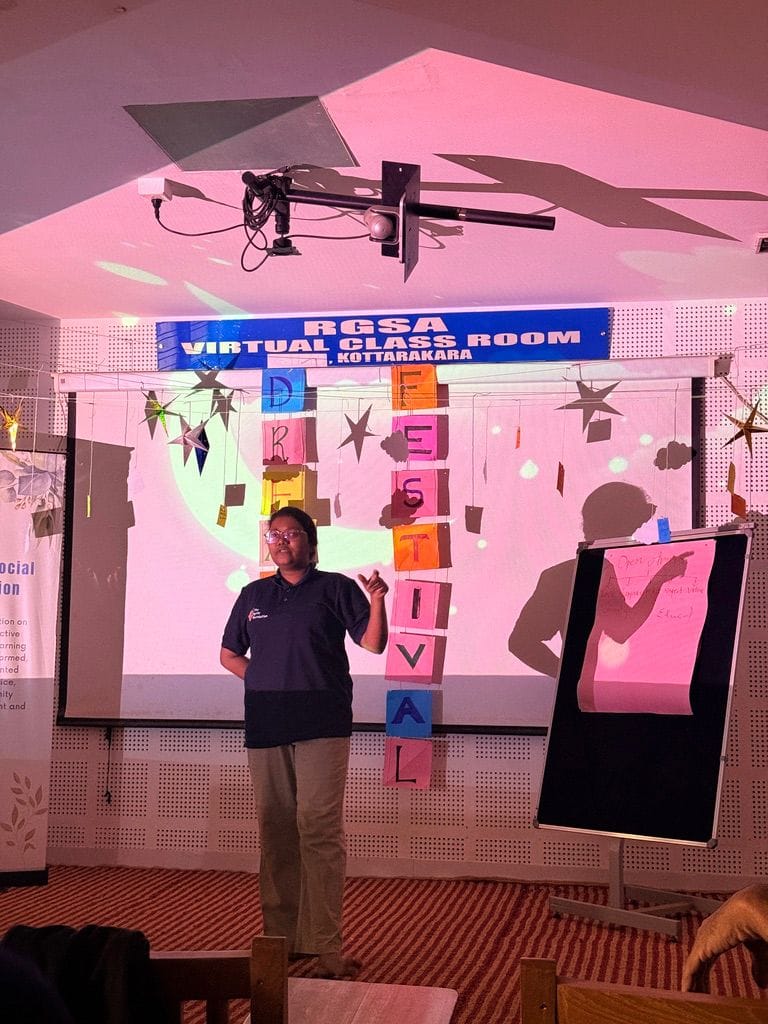
At the Solutions Festival, participants of School for Social Transformation (SST) 8.0 continued to present community-driven ideas rooted in lived realities and social concern. The next presentation was by Roshna Kottakkat, who introduced her Community Action Project titled “Lack of Autonomy for Young Women in Malabar.”
About the Project
Roshna’s project emerges from the Malabar region of Kerala, a place known for high literacy, strong family systems, and progress in women’s education and health. Yet, beneath these achievements lies a persistent challenge, as data and lived experience reveal that early marriage continues to shape the lives of many young women, especially after they turn eighteen. Despite education, many life decisions remain controlled by family and social expectations, leaving young women with limited space to voice their personal goals and aspirations.
This lack of autonomy leads to constant fear and anxiety around marriage, feelings of guilt for wanting independence, low self-confidence, emotional suppression, and loss of identity. The impact extends beyond mental health, as early marriage often results in dropping out of higher education, reduced participation in employment, economic dependence, and unequal power dynamics in relationships, reinforcing long-term cycles of inequality and limited opportunity.
The Proposed Solution
The project proposes school-based workshops for Plus Two students, creating safe spaces for dialogue on autonomy, mental health, constitutional rights, and early marriage. Each workshop is designed as a two-hour session that blends interaction, reflection, and learning through simple, inclusive language and storytelling to encourage active participation.
Roshna outlined a structured approach that includes trust-building activities, discussions on personal choice and emotional well-being, awareness of legal age of marriage and constitutional rights, and group-based reflection exercises. Student reflections and feedback will be collected after each workshop, and necessary permissions will be secured from school authorities to ensure ethical, respectful, and supportive engagement.
Why It Matters
This presentation highlighted that education alone does not guarantee freedom. Roshna’s project brings visibility to invisible struggles, the emotional weight young women carry when their futures are decided for them.
By addressing autonomy and mental health together, the initiative reframes early marriage not just as a social practice, but as a question of rights, dignity, and well-being. It challenges communities to recognise that true progress lies in allowing women to choose their own paths.
A Step Forward
As part of the Solutions Festival, this presentation stood as a commitment to nurturing confident, self-aware young women. By creating spaces for conversation, awareness, and reflection, the project lays the foundation for a future where marriage becomes a choice, not a pressure, and where every young woman is empowered to decide her own life’s direction.